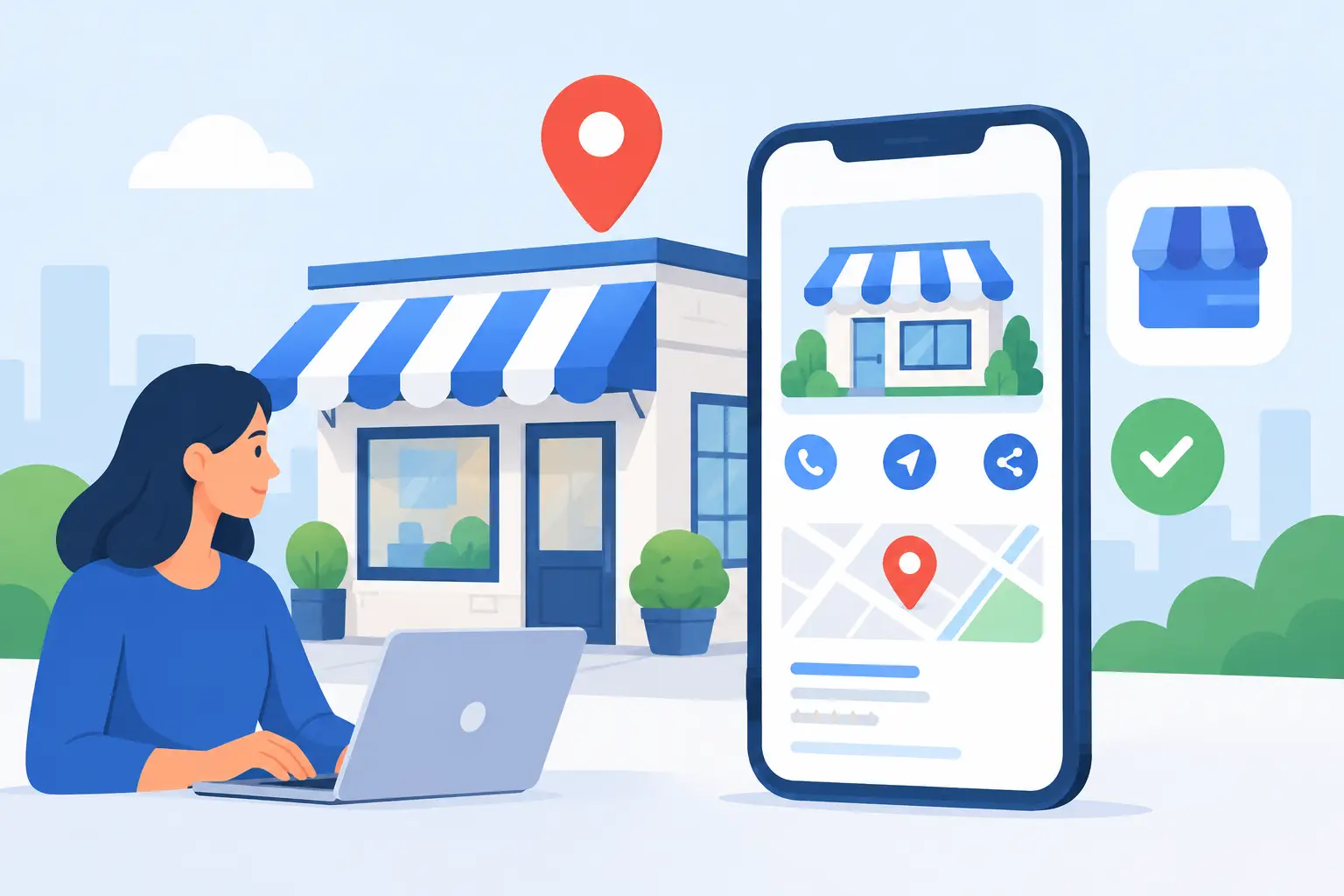


A customer searches “best pizza near me,” “emergency plumber,” or “hair salon open now” with a credit card in hand. If your business does not appear where that search happens, a competitor gets the call, the order, or the booking. Local SEO for small business is how you stop losing those ready-to-buy customers and start becoming the obvious choice in your trade area.
This is not about chasing vanity rankings for broad terms that never produce revenue. It is about showing up when nearby customers need exactly what you sell, building enough trust for them to choose you, and making it easy for them to take the next step.
Why Local SEO for Small Business Produces Revenue
Local search has high intent. Someone looking for “Italian restaurant near me” is not researching the history of pasta. They are deciding where to eat. Someone searching “roof repair in [city]” may need help before the next storm hits. The businesses that appear prominently, look credible, and provide clear information win an outsized share of those opportunities.
For a local operator, visibility has to lead somewhere measurable: calls, directions, online orders, appointment requests, quote forms, walk-ins, and repeat visits. A beautiful website that nobody finds is not a growth engine. A top search position with outdated hours, unanswered reviews, or a broken booking link can lose the sale just as quickly.
That is why local SEO works best as a connected system. Your business profile, website, reviews, service pages, location information, and customer experience must all tell the same story: this is a real, trusted business that serves this area well.
Start With the Local Search Assets You Control
Your Google Business Profile is often the first impression customers get of your company. It can appear before your website in map results, and it gives people the information they need to act fast. Treat it like a frontline salesperson, not a listing you set up once and forget.
Claim the profile, verify it, and make every detail accurate. Use your actual business name, correct primary category, local phone number, website, address or service area, current hours, holiday hours, and a concise description that explains what makes you worth choosing. Add real photos regularly. A restaurant should show food, the dining room, staff, and pickup options. A contractor should show completed work, crews, equipment, and the types of jobs customers hire them for.
The category choice matters more than most owners realize. A pizzeria should not settle for a vague category if a more precise option reflects what it sells. A home service company may need a primary category that matches its highest-value service, then supporting categories for related work. The goal is relevance, not stuffing every possible label into the profile.
Keep your name, address, and phone number consistent across the web. If one directory shows an old suite number, another lists a tracking number, and your website uses a different business name, search engines and customers get mixed signals. Clean, consistent information makes it easier to trust that you are the business customers are looking for.
Build Website Pages Around How Customers Search
Your website needs more than a homepage and a contact page. It needs pages that match the services and locations that drive your best business.
A kitchen remodeling company may need separate, useful pages for kitchen remodeling, bathroom remodeling, cabinet installation, and design consultations. A restaurant may need pages that support catering, private events, online ordering, menu highlights, and each location. A multi-location operator should give every location its own accurate page with unique details, local directions, hours, contact information, and a reason to visit that specific location.
Do not manufacture dozens of thin city pages that say the same thing with a different town name. That approach creates weak content and rarely helps customers. Build location-focused pages only where you actually serve customers and can provide meaningful proof of local experience.
The strongest pages answer buying questions. What do you offer? Who is it for? What areas do you serve? What does the process look like? What should customers expect? Why should they choose you over the shop or provider down the road? Add clear calls to action so visitors can order, call, request a quote, book an appointment, or get directions without hunting for the next step.
Make mobile action effortless
Most local searches happen on phones, often between errands, during lunch, or in the middle of an urgent problem. Your site should load quickly, display cleanly on a small screen, and make the phone number, directions, form, and ordering or booking path easy to use.
Do not force a hungry customer through six clicks to find your menu. Do not make a homeowner pinch and zoom to request an estimate. Friction is expensive because nearby competitors are one tap away.
Reviews Turn Visibility Into Trust
Rankings get attention. Reviews help close the deal.
A business with a strong rating, recent customer feedback, and thoughtful owner responses feels safer than a business with no reviews or a profile full of unanswered complaints. This is especially true in competitive categories where customers have several similar options within a few miles.
Create a simple process for asking happy customers for honest feedback. A restaurant can ask after a successful catering order or send a follow-up text after a pickup order. A service business can request a review after the job is complete and the customer confirms they are satisfied. Timing matters. Ask while the positive experience is still fresh.
Never buy reviews or pressure customers to leave only five-star feedback. It can damage credibility and create platform problems. Instead, build a consistent reputation process that generates real feedback over time.
Respond to reviews with care and speed. Thank positive reviewers specifically when possible. For a negative review, acknowledge the concern, stay professional, and move the resolution offline when personal details are involved. A calm response will not erase every bad experience, but it shows future customers that you take your reputation seriously.
Publish Proof That You Belong in the Market
Local SEO is not simply a technical exercise. Search engines are trying to identify businesses that are relevant, prominent, and trustworthy. Your content should supply real evidence.
For a local retailer, that might mean highlighting seasonal products, community events, staff expertise, or special services such as curbside pickup. For a home improvement company, it could mean project galleries, before-and-after photos, service-area case examples, and explanations of local building challenges. For an entertainer, it may be videos, venue partnerships, upcoming appearances, and testimonials from local clients.
This content does not need to be long for the sake of being long. It needs to be specific. “We provide quality service” says almost nothing. “We handled a same-week water heater replacement for a family in our service area and coordinated permit requirements” gives customers a reason to believe you can handle their problem.
Local partnerships and legitimate mentions can strengthen that proof as well. Community involvement, sponsorships, local organizations, and nearby business relationships can create visibility beyond search. The trade-off is that these efforts take time. Focus on opportunities that genuinely fit your business instead of collecting random mentions that produce no local awareness or customer value.
Measure the Actions That Matter
Do not judge local SEO by rankings alone. Rankings move based on location, device, search history, competition, and the exact words a customer uses. A number-one position means little if calls and bookings do not increase.
Track the outcomes that support revenue: profile calls, direction requests, website form submissions, online orders, appointment bookings, quote requests, and tracked phone leads. Look for patterns by service, location, and season. If one service page brings qualified estimate requests while another gets traffic but no conversions, the answer may be better content, a stronger offer, or a clearer call to action.
For businesses with tight trade areas, small improvements can have a major impact. Moving from invisible to visible for a handful of high-intent searches may produce more revenue than a broad campaign that reaches people who live too far away to buy.
A Vital Need approaches local marketing with that practical standard: make quality businesses famous in the markets they actually serve. The right plan depends on your category, competition, service radius, and customer journey, but the objective stays the same. Be easy to find, easy to trust, and easy to choose.
Your next customer is already searching nearby. Give them a clear reason to find you first and an even clearer reason to come back.