
The customer who needs you is probably already searching within a few miles of your front door. They are comparing restaurants before dinner, looking for a plumber during a leak, or choosing a retailer based on what appears first and looks most trustworthy. If you want to know how to market a local business, start there: be impossible to miss when local buyers are ready to act.
Local marketing is not about posting constantly or chasing every new platform. It is about owning your trade area with a clear offer, a strong reputation, and campaigns that turn attention into calls, bookings, orders, and repeat visits.
Start by defining the trade area you intend to win
Most small businesses market too broadly. A neighborhood pizzeria may pay to reach people 25 miles away who will never order. A home service company may chase a whole metro area before it has enough visibility in the ZIP codes that actually produce profitable jobs.
Choose the communities, neighborhoods, and ZIP codes that matter most. Look at where your best customers live, where jobs are most profitable, how far people will realistically travel, and where competitors are weak. A restaurant may need a tight three-to-five-mile radius. A roofer may need several high-value towns. The right answer depends on your service model, margins, and capacity.
Once you know the territory, make your marketing specific. Mention local service areas on your website. Build offers around local events, school calendars, weather, and seasonal demand. Use photos that show your actual team, storefront, products, and completed work in the community. Generic marketing gets ignored. Familiar marketing gets remembered.
Make local search your first sales channel
When someone searches “pizza near me,” “best electrician in [town],” or “same-day HVAC repair,” they are not looking for inspiration. They are looking for a business to contact now. That makes local search one of the highest-intent channels available to a local operator.
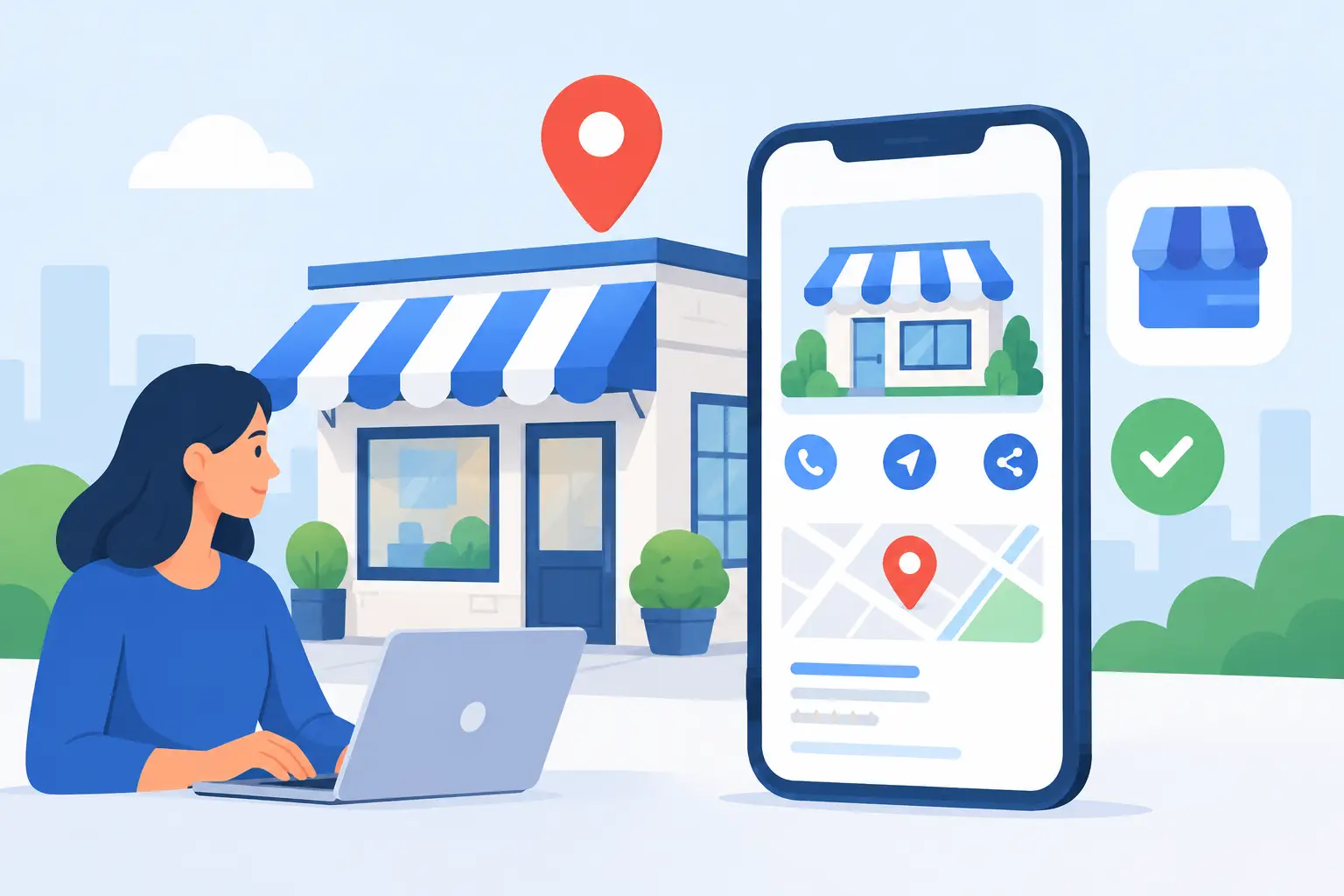
Your business profile needs to be complete, accurate, and active. Use the exact business name customers know, correct hours, current phone number, service categories, photos, and a direct description of what you do. If you offer online ordering, appointments, estimates, or bookings, make those actions easy to find.
Your website must support that visibility. A strong local site does more than look polished. It tells a visitor what you offer, where you offer it, why they should trust you, and what to do next. Every major service should have a clear page. Every location you truly serve should be represented naturally. A homeowner should not have to hunt for your service area or wait until the third click to find your phone number.
Build pages around buyer intent, not marketing jargon
A local retailer may want to talk about its “curated shopping experience.” That can support the brand, but it will not replace pages for the products people actually search for. A restaurant needs clear menus, ordering information, catering details, and location pages. A contractor needs service pages that address real jobs, such as water heater replacement, kitchen remodeling, or emergency repair.
Write for the question behind the search. What does it cost? Do you serve my town? Are you available today? Can I order online? Do you have proof that you do this well? Answer those questions clearly, then give the visitor one obvious next step.
Earn reviews before you need them
A five-star reputation is not a vanity metric. It is a conversion tool. When two local businesses offer similar services, the one with more recent, credible reviews usually gets the call, reservation, or order.
The mistake is asking for reviews only when business is slow. Build a repeatable process instead. Ask after a successful job, a great meal, a completed delivery, or a positive customer interaction. Train the team to recognize those moments. Make the request short and easy, but never pressure customers or offer incentives that compromise trust.
Respond to reviews with the same discipline. Thank positive reviewers specifically. Address negative feedback calmly, without getting defensive or turning the reply into an argument. A thoughtful response is not just for the unhappy customer. It is for every future buyer deciding whether your business takes accountability seriously.
For a local restaurant, fresh reviews can lift takeout and dine-in traffic. For a home service business, they can be the difference between a homeowner requesting an estimate or moving on to the next listing. Reputation management works because it reduces risk in the customer’s mind.
Use paid advertising to create immediate demand
Search visibility compounds over time. Paid ads can produce faster momentum when they are targeted correctly. The key is not spending more. It is connecting the ad, the offer, and the landing page to a measurable business outcome.
A pizzeria might run a tight-radius campaign promoting a family meal deal on slow Tuesday nights. A local entertainer might advertise private-event packages to people planning birthdays and corporate gatherings nearby. A remodeling company could target homeowners in specific towns with a seasonal financing offer and a simple estimate request form.
Do not send paid traffic to a generic homepage and hope for the best. Send it to a focused page that matches the promise in the ad. If the ad says “Same-Day Drain Cleaning,” the page should repeat that service, show the service area, establish trust, and make calling or booking effortless.
Track calls, form submissions, online orders, booked appointments, and revenue when possible. Clicks alone do not pay the bills. Some campaigns generate cheap clicks from curious people. Others cost more per click but produce customers who spend real money. Judge performance by qualified leads and sales.
Stay in front of customers after the first purchase
The first sale is expensive. The second, third, and tenth sale are where local businesses build real momentum. Yet many operators put all their energy into acquisition while leaving past customers sitting in a database they rarely hear from.
Email and text marketing give you a direct line to people who have already raised their hand. Use it with purpose. Restaurants can promote limited-time specials, catering, loyalty offers, and slow-day incentives. Retailers can announce new arrivals, local pop-ups, and VIP shopping events. Service businesses can send maintenance reminders, seasonal checklists, and timely upgrade offers.
The best messages are useful, timely, and easy to act on. A text sent at 4:30 p.m. with a dinner offer can drive orders that night. An email reminder about furnace maintenance can fill a service schedule before the first cold snap. Frequency depends on your category and audience, but every send should have a reason.
Turn customer data into smarter offers
Not every customer should receive the same promotion. A family that regularly orders pizza may respond to a weekday bundle. A customer who bought a water heater three years ago may be a better fit for a maintenance plan than a new-installation ad.
Segmenting does not need to be complicated. Start with purchase history, location, service type, and how recently someone engaged. Relevance protects your list and makes every campaign more likely to produce revenue.
Show proof where local customers are paying attention
Social media can help a local business become familiar, but it should not become a content treadmill. Post material that proves your business is active, credible, and worth choosing. Before-and-after projects, staff introductions, customer favorites, behind-the-scenes preparation, event footage, and real community involvement all work when they connect back to your offer.
A landscaper can show a finished yard in a recognizable neighborhood. A retailer can feature a new product arriving that week. A restaurant can show the dish people keep coming back for and point customers toward ordering or reservations. The goal is not empty engagement. The goal is local recognition that makes the next buying decision easier.
Community partnerships can amplify this effect. Sponsor the right youth team, collaborate with a nearby business, support a school event, or participate in a local fundraiser when the fit is genuine. These efforts work best when they put your name in front of the same people you want as customers, not just when they generate a logo placement.
Measure what creates customers, then improve it
Local marketing becomes expensive when nobody knows what is working. Establish a simple scorecard and review it every month. Track search visibility in priority areas, calls, form leads, direction requests, online orders, review volume and rating, email or text revenue, and the cost to acquire a customer from paid campaigns.
Then ask sharper questions. Which towns produce the best leads? Which services have the highest close rate? Which offer brings in first-time buyers who return? Are calls being answered quickly? Is the website losing mobile visitors because the booking process is too hard?
Marketing cannot fix an unanswered phone, unclear pricing, weak follow-up, or poor customer experience. But when operations are strong, focused marketing makes that strength visible at scale. That is how you become the obvious choice instead of another business hoping to be found.
If your business is ready to own its trade area, choose a few high-impact channels, execute them consistently, and demand proof that they are generating real customer action. A Vital Need helps quality local operators turn that discipline into visibility, traffic, and repeat business – the kind that makes a business famous where it matters most.