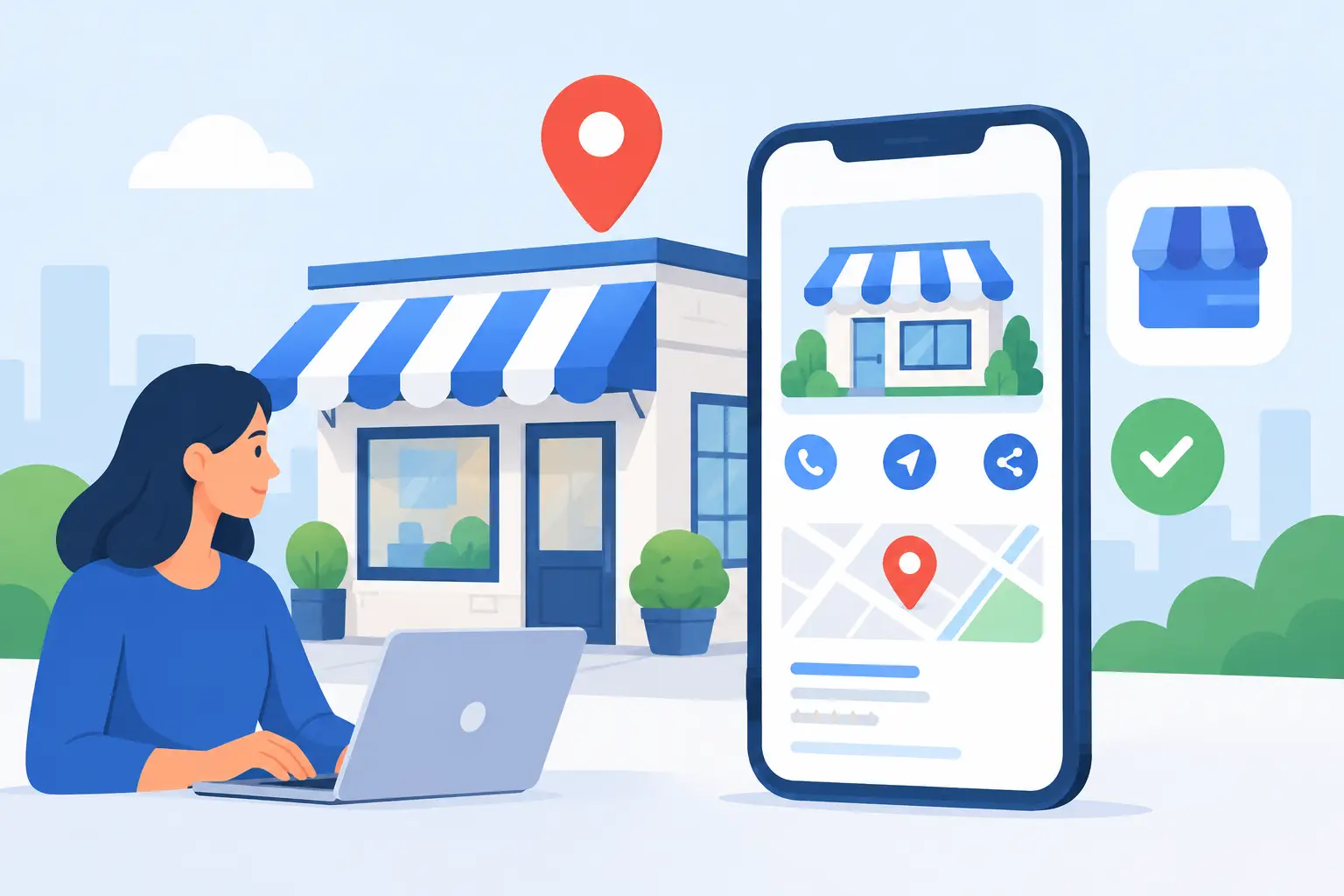

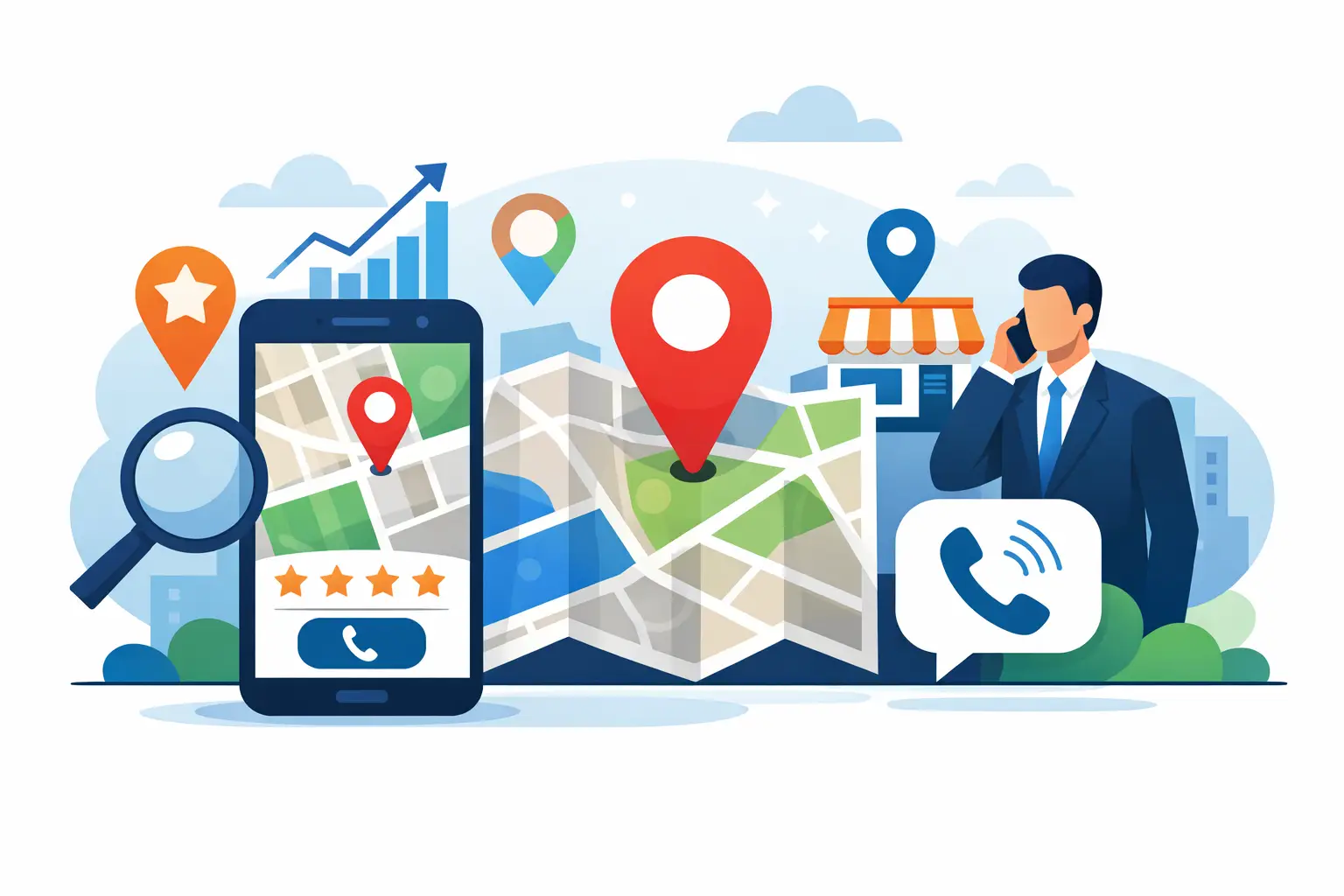
A customer searching “pizza near me,” “emergency plumber,” or “best hair salon in [town]” is not researching for fun. They are looking for a business to call, visit, or book right now. Google Maps ranking factors determine whether your business gets that opportunity or watches a competitor take it.
For local operators, the map pack is prime real estate. It can drive phone calls before a customer ever reaches your website. But there is no single switch that puts a business at the top. Google weighs relevance, distance, and prominence, then looks for evidence that your business is the strongest answer for that specific search in that specific location.
The Three Google Maps Ranking Factors That Matter Most
Google has been unusually clear about the foundation of local rankings: relevance, distance, and prominence. The details behind those categories are where local businesses either gain ground or lose it.
Relevance: Does Your Business Match the Search?
Relevance means Google understands what you do and believes your business fits the customer’s query. A restaurant should be clearly categorized as the kind of restaurant it is. A contractor should make the services they actually perform easy for Google and customers to identify.
Your Google Business Profile carries much of this weight. The primary category is especially important because it tells Google the main service you provide. A pizzeria should not choose a vague category if a more precise one exists. A home service company should not try to rank for every trade under the sun if its real specialty is roofing, HVAC, or plumbing.
Choose the most accurate primary category, then use additional categories only for real, established services. Complete the profile with accurate business details, service areas where appropriate, hours, attributes, products or services, photos, and a direct description of what makes you worth choosing.
Your website needs to reinforce the same message. If your profile says you are a family-owned Italian restaurant in Newark, but your website barely mentions Italian food, Newark, catering, or takeout, Google gets weaker signals. Strong local visibility comes from alignment, not keyword stuffing.
Distance: You Cannot Move the Searcher
Distance is the factor business owners most want to negotiate with, and the one they cannot control. Google considers how far each potential result is from the person searching or from the location named in the search.
That means a business can be excellent and still rank lower for a search performed 12 miles away. It also means a map ranking report from your office is not the whole story. Rankings can shift street by street, neighborhood by neighborhood, and suburb by suburb.
You should never create fake locations, use virtual offices you do not staff, or load your profile with misleading addresses to game proximity. Those shortcuts can trigger profile suspension and put customer trust at risk. Instead, build a real footprint where you operate. If you serve customers at their location, set your service area honestly. If customers visit your storefront, make the address, suite number, signage, and hours accurate everywhere.
Distance is not an excuse to give up on nearby markets. It is a reason to target your actual trade area with better relevance and stronger prominence. A pizza shop may not win the entire metro area, but it can become the obvious choice in the neighborhoods that produce its best delivery and carryout customers.
Prominence: Does the Market Trust You?
Prominence is Google’s measure of how established, visible, and trusted your business appears online and offline. This is where reputation, local authority, and consistent business information can separate a serious operator from a listing that looks abandoned.
Reviews are a major part of the picture. Quantity matters, but quality, recency, detail, and response activity matter too. A business with 250 old reviews and no recent customer feedback may look less active than a competitor earning genuine new reviews every week.
Ask happy customers for reviews as part of your normal process. A restaurant can ask after a strong dine-in experience or a successful catered event. A contractor can ask after the final walkthrough. Make the request easy, but never offer incentives for reviews or pressure customers to use specific language. Authentic feedback is safer and more persuasive.
Respond to reviews with care. Thank positive reviewers without recycling the same canned sentence. Address negative feedback calmly, take the issue offline when needed, and show future customers that your business takes service seriously. You are not only managing one unhappy customer. You are showing everyone else how you operate.
What Strengthens Your Google Business Profile
Your Google Business Profile is not a set-it-and-forget-it directory listing. It is a live local sales asset. An incomplete or inaccurate profile creates friction before a customer has a chance to choose you.
Start with the fundamentals: your exact business name, address, phone number, website, hours, categories, and service area must reflect reality. If holiday hours change, update them. If you added online ordering, a new menu, an appointment option, or a new service line, make that visible.
Photos matter because Maps users make fast decisions. A restaurant needs current food, dining room, exterior, and team photos. A home service company needs proof of finished work, branded vehicles, technicians, and the types of jobs it wants more of. Avoid generic stock imagery when real evidence is available.
Keep an eye on customer questions and profile edits. Google and users can suggest changes to your listing. If someone changes your hours or category incorrectly and nobody catches it, you can lose calls without realizing why.
Website Signals Still Move the Needle
A Google Business Profile can get you into the fight, but a credible local website helps you win it. Google wants confidence that the business it shows on Maps is legitimate, relevant, and useful.
Build clear pages around your core services or offerings and the locations you truly serve. For a roofer, that may mean detailed pages for roof repair, replacement, inspections, and storm damage. For a restaurant, it may mean pages for the menu, catering, private events, delivery, and the local communities where customers order.
Do not spin out thin pages that swap one city name for another. That tactic creates weak content and rarely builds trust. Write pages that answer real local customer questions: turnaround times, service boundaries, pricing approach, order options, specialties, parking, accessibility, or what happens after a customer calls.
Mobile experience matters because many map searches happen on a phone. If a customer taps through from Google Maps and your site is slow, confusing, or hard to call from, you have paid the price of visibility without earning the lead.
Citations, Local Mentions, and Authority
Google uses many signals beyond your own website and profile. Consistent business listings across reputable directories help validate basic business information. Incorrect names, old phone numbers, duplicate profiles, or conflicting addresses create confusion for customers and search engines alike.
Local mentions can also build prominence. Think community event sponsorships, local news coverage, chamber participation, partnerships with nearby organizations, and legitimate industry recognition. These are not just SEO trophies. They are signs that a real business is active in its market.
The trade-off is that authority takes time. You can correct an incorrect phone number today. You cannot manufacture a trusted local reputation overnight. The businesses that hold map visibility tend to keep showing up, serving customers well, earning feedback, and making it easy for the market to verify who they are.
A Practical Priority List for Local Operators
When a Maps listing is underperforming, do not chase every tactic at once. Fix the issues most likely to affect revenue first.
First, verify that your Google Business Profile is claimed, accurate, complete, and using the right primary category. Next, confirm that your website and major listings show the same core contact information. Then create a consistent review process that earns fresh feedback from real customers. Finally, improve the pages, photos, offers, and customer experience that turn visibility into calls, orders, bookings, and visits.
Track results beyond ranking screenshots. Watch calls, direction requests, website clicks, online orders, booked jobs, and the neighborhoods producing those actions. Ranking number one for a broad term means little if it does not create profitable customer activity.
The Goal Is Not Just a Higher Pin
Google Maps rewards businesses that make it easy to understand, easy to trust, and easy to choose. That is good news for quality-driven local operators. You do not need gimmicks to become more visible. You need accurate information, real proof, a strong local reputation, and a customer experience worth talking about.
Build those signals consistently, and your business has a better shot at becoming famous where it counts: in the trade area that keeps your phones ringing and your doors busy.