
A packed Friday night feels great. But if those guests disappear for six weeks and order from the restaurant down the street next time, the rush did not build a stronger business. This restaurant loyalty marketing guide is about turning good first impressions into repeat visits, larger checks, direct orders, and a customer list your restaurant actually owns.
For independent restaurants and pizzerias, loyalty is not a points app slapped onto the register. It is a revenue system. Done right, it gives regulars a reason to choose you again before they compare prices, scroll delivery apps, or default to habit.
Start With the Customer Behavior You Want
The best loyalty offer is not always the most generous one. It is the one that changes behavior in a way that protects margin and increases visit frequency.
A quick-service pizza shop may want customers to order directly instead of through third-party delivery platforms. A full-service restaurant may need to fill Tuesday and Wednesday seats. A breakfast cafe may want to turn an occasional weekend guest into a weekly regular. Each goal calls for a different reward.
Before choosing software or designing a punch card, answer three questions: What is a customer worth over a year? What action would make that customer more valuable? What reward can you afford without training guests to wait for discounts?
For example, a neighborhood burger restaurant might offer a free side after five visits. That is often more profitable than offering 20% off a full meal because it encourages another visit while keeping the reward cost controlled. A pizzeria may give loyalty credit only for direct online orders, which shifts demand toward the channel with better margins and stronger customer data.
The goal is not to bribe people to buy. The goal is to make returning feel natural, recognized, and worthwhile.
Build a Restaurant Loyalty Marketing Guide Around Simplicity
If a guest cannot understand your program in five seconds, it will not move the needle. The strongest restaurant loyalty programs are easy to join, easy to explain, and easy for staff to support during a rush.
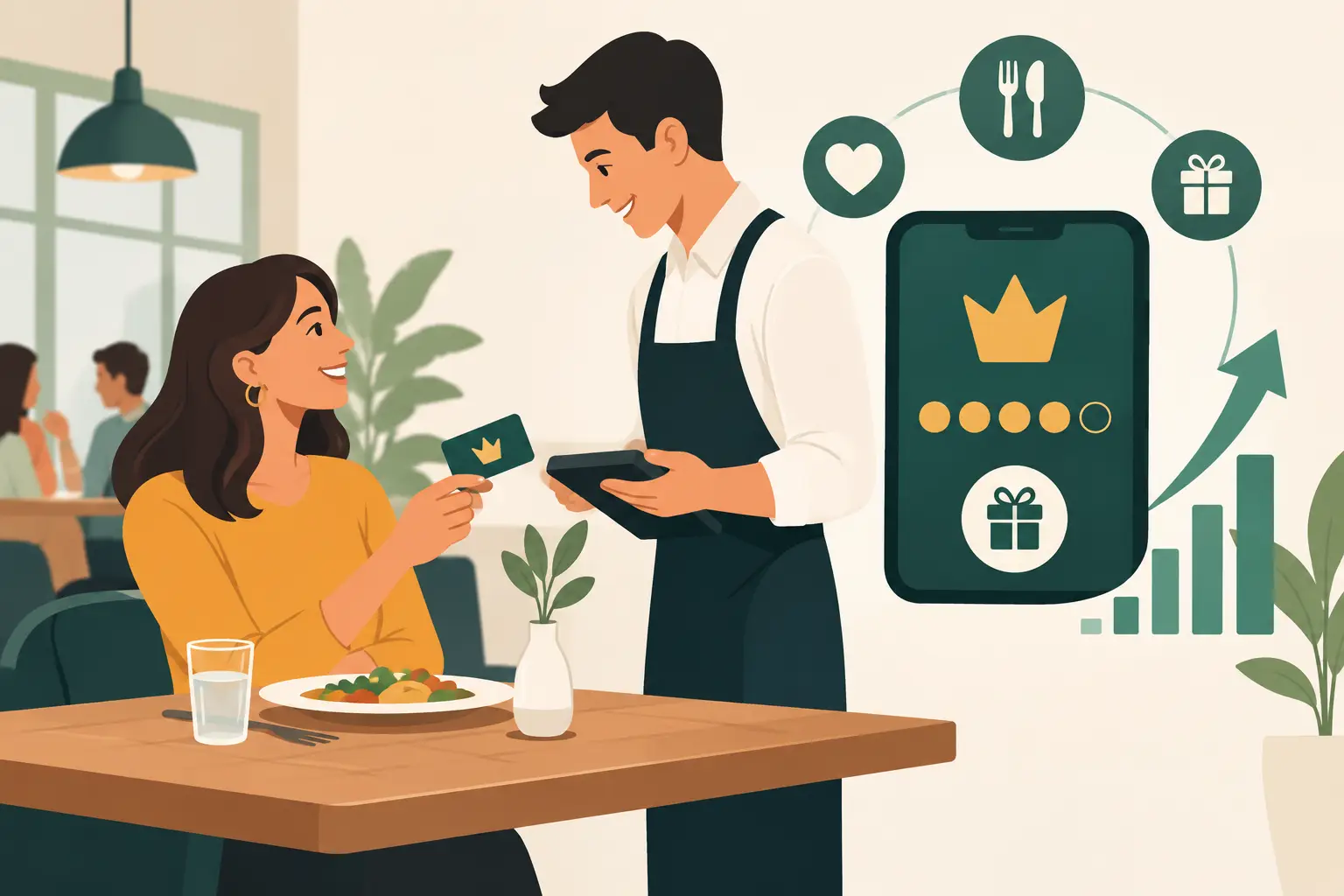
Digital programs are usually the best fit because they capture phone numbers or email addresses, track visits automatically, and give you a way to follow up. But digital does not mean complicated. A simple setup might be: enter a phone number at checkout, earn one point for every dollar spent, and receive a reward at a clear threshold.
A traditional punch card can still work for a small coffee shop or walk-up lunch counter with a loyal local crowd. The trade-off is data. You know the card was used, but you cannot reliably message that guest about a slow-day offer, a new menu item, or a birthday reward. If repeat business is a serious growth priority, collecting permission-based customer contact information is worth more than a stack of stamped paper cards.
Make enrollment part of the transaction. Train staff to say something direct: “Want to earn credit toward your next meal? Just enter your phone number.” Do not make the team recite a long pitch. Put the benefit on counter signage, receipts, takeout packaging, table tents, and your ordering page so customers see it more than once.
Give Rewards That Create Profitable Repeat Visits
Not every reward deserves a place in your program. Free items, bonus points, and limited-time perks can all work, but they should match the economics of your menu.
A reward built around a high-margin item can increase the value of a future order. A free fountain drink, dessert, appetizer, or add-on may cost far less than a blanket percentage discount. It also gives customers a reason to add an entrée or bring another person along.
Consider these reward structures when they fit your operation:
- Visit-based rewards work well for cafes, lunch spots, and fast-casual restaurants with frequent transactions.
- Spend-based rewards make more sense when checks vary widely, such as family restaurants, steakhouses, and catering-focused concepts.
- Direct-order rewards help restaurants reduce dependency on third-party marketplaces.
- Tiered perks can reward your best customers with early menu access, a birthday item, or priority invitations rather than constant discounts.
The right choice depends on your customer cadence. A pizza customer may order once or twice per month, so a reward after 10 visits may feel unreachable. A lunch cafe can ask for eight visits because regulars may get there in a few weeks. Set an achievable first reward, then use deeper incentives to keep your best customers engaged.
Use Customer Data Without Acting Like a Chain
Local restaurants have an advantage national brands cannot copy: they can communicate like a real part of the neighborhood. Your loyalty data should help you be more relevant, not more intrusive.
Start with a few useful customer groups. You may have direct-order customers, dine-in regulars, lapsed guests, high-spend households, catering buyers, and people who only respond to limited-time specials. Their messages should not all be the same.
A customer who has not ordered in 45 days may respond to a simple text: “We miss you. Come back this week and enjoy a free garlic knot with any direct pizza order.” A frequent buyer does not need that same offer. They may care more about being first to hear about a new specialty pie or getting a small VIP perk during a local event.
Text marketing is especially effective for time-sensitive restaurant offers, but permission matters. Get clear consent, identify your business, and make opting out easy. Email is better for menu stories, event announcements, seasonal promotions, and messages that customers may save for later. Use both channels with restraint. If every message is a discount blast, guests learn to ignore you.
Connect Loyalty to the Entire Local Marketing Machine
A loyalty program cannot carry weak visibility on its own. It works best when it catches the customers your other marketing already brings in.
Your local SEO helps hungry nearby customers find you. Your reputation management gives them confidence to try you. Paid ads and social media introduce a new offer. Online ordering removes friction when they are ready to buy. Loyalty marketing is what gives that newly acquired customer a reason to return after the first transaction.
That connection should be visible everywhere. Add the loyalty benefit to your website, online ordering flow, receipts, Google Business Profile posts when appropriate, social content, and in-store materials. If you are running a campaign for a new lunch special, include a loyalty reason to come back next week instead of treating the sale as a one-time win.
For a local operator, this is where momentum compounds. More first-time traffic creates more loyalty signups. More signups create more repeat orders. More repeat orders improve revenue stability, which gives you room to market with confidence instead of panicking every time a slow week arrives.
Measure Revenue, Not Just Signups
A thousand loyalty members sounds impressive until you find out only 80 have purchased again. Vanity numbers do not pay payroll.
Track enrollment rate, repeat purchase rate, average time between visits, direct-order share, reward redemption rate, and average check for members versus non-members. Watch whether rewards increase a future purchase or simply discount purchases guests would have made anyway.
A low redemption rate is not automatically bad. It may mean the reward threshold is too high, customers do not know their balance, or the staff is not mentioning the program. A very high redemption rate may be healthy, or it may signal that the offer is too expensive. Look at the margin and the extra revenue generated after redemption before making changes.
Review results monthly, not once a year. Test one variable at a time: the reward amount, the timing of a reactivation text, the threshold for a first reward, or the offer for direct ordering. Small improvements can create meaningful gains when repeated across hundreds of customers.
Avoid the Loyalty Mistakes That Drain Margin
The most common mistake is leading with a discount before defining the objective. “Join and get 20% off” may generate signups, but it can attract deal hunters and cut into profit without creating loyalty.
Another mistake is hiding the program. If the only mention appears in a tiny footer on your website, customers will not join. Staff participation, packaging, checkout prompts, and follow-up messages all matter.
Finally, do not let the program become generic. Your regulars chose your restaurant for a reason: the food, the owner, the neighborhood feel, the speed, or the experience. Build offers around what makes your business the obvious choice in your trade area. A Vital Need helps local operators connect those retention campaigns to the visibility and customer traffic that feed them.
Your best customers are already telling you what works every time they come back. Give them a clear reason to return, make that return easy, and treat every repeat visit like the competitive advantage it is.