

A customer searching for “pizza near me,” “emergency plumber,” or “best patio furniture in town” is not researching for fun. They are ready to choose. This small business local marketing guide is built around one job: making sure your business is the obvious choice when that moment happens.
Local marketing is not about posting constantly or chasing every new platform. It is about owning the small set of places where nearby customers form an opinion, take action, and decide whether to return. For a restaurant, that may mean more orders on a slow Tuesday. For a home service company, it may mean more qualified calls from the right ZIP codes. For a retailer, it may mean turning a local search into a visit before a competitor gets the sale.
Start With the Trade Area You Can Actually Win
Small businesses lose money when they market too broadly. You do not need to be known everywhere. You need to be known by the people most likely to visit, call, book, or order from you.
Define your trade area before you set a budget or launch a campaign. A neighborhood pizzeria may draw most of its orders from a three-mile radius, while a remodeling company may serve several towns within 25 miles. The right answer depends on travel time, average ticket size, how often customers buy, and how crowded the market is.
Then get specific about your best customer. A family restaurant might target parents looking for reliable weeknight takeout. A local entertainer may target event planners, wedding venues, and corporate office managers. A roofing company may focus on homeowners in older neighborhoods where repair needs are more common.
This clarity changes everything. Your offers become more relevant, your advertising gets tighter, and your website stops trying to speak to everyone. The goal is not broad attention. The goal is profitable local attention.
Win the Local Search Before Customers Visit
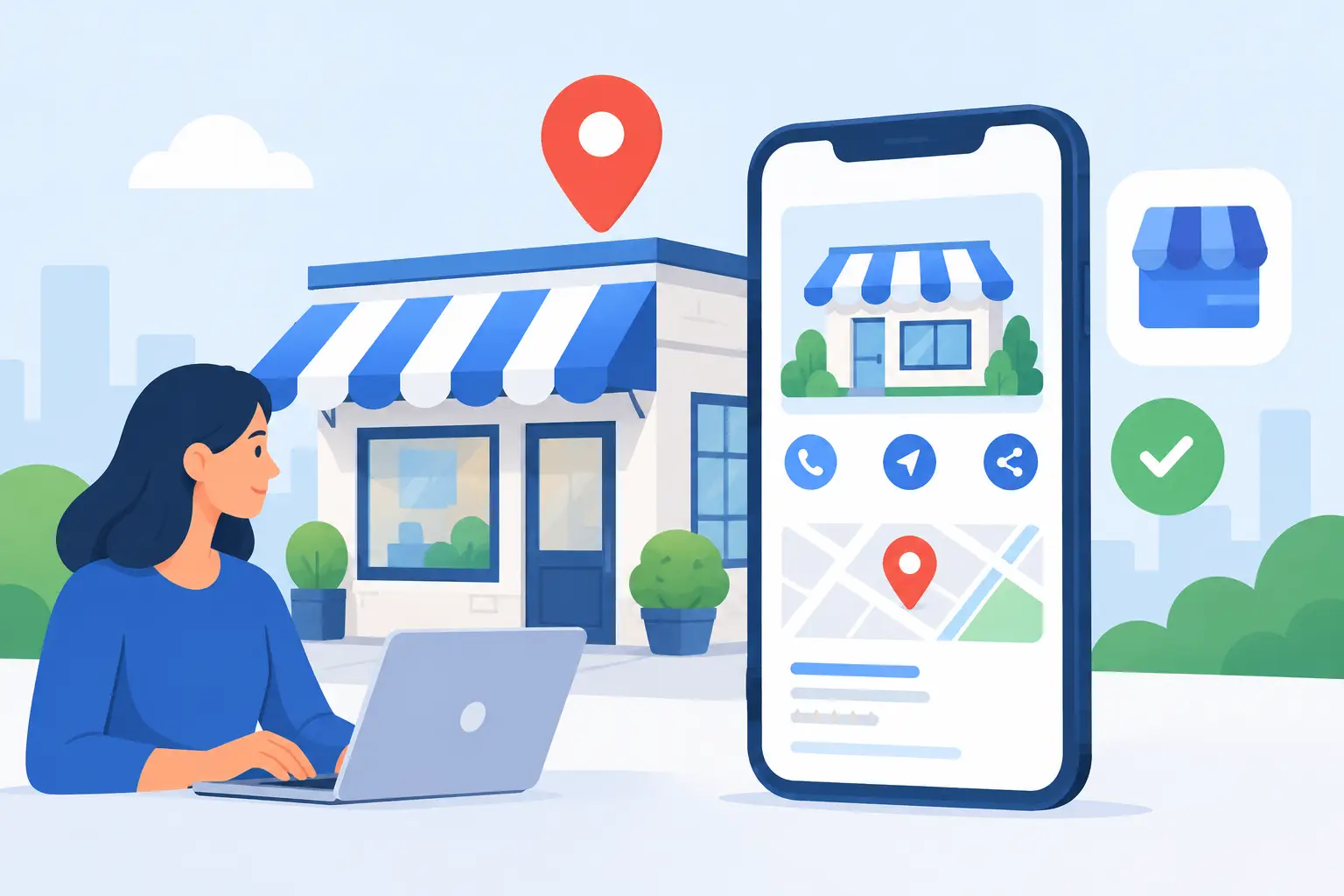
When someone is ready to buy locally, they often start with a map result, a business profile, or a quick search on their phone. If your business information is incomplete, outdated, or less convincing than the shop down the street, that customer may never reach your website.
Your local business profile needs accurate hours, a correct phone number, current categories, service details, quality photos, and a clear description of what makes you worth choosing. Restaurants should keep menus, ordering options, and holiday hours current. Service businesses should show the services they perform and the communities they serve. Retailers should highlight product categories, seasonal inventory, and reasons to visit in person.
Reviews are part of this decision, but quantity alone is not the whole game. Customers read the newest reviews, look for patterns, and notice whether an owner responds. A steady flow of honest, recent feedback signals that your business is active and trusted.
Ask for reviews at the right moment: after a successful service visit, at the end of a great meal, after a smooth pickup order, or when a customer sends an unsolicited compliment. Make the request simple and respectful. Do not pressure customers, offer incentives for positive reviews, or ignore negative feedback.
A thoughtful response to a bad review can protect more sales than an argument ever will. Acknowledge the concern, take responsibility where appropriate, and move the detailed conversation offline. Future customers are watching how you handle problems.
Build a Website That Turns Interest Into Action
A beautiful website that does not generate calls, bookings, orders, or quote requests is decoration. Your website must make the next step obvious within seconds.
For a local business, the essentials are straightforward: a visible phone number, a clear service area, fast mobile performance, proof that you are credible, and a direct call to action. That action may be “Order Now,” “Book an Estimate,” “Call for Same-Day Service,” or “See Today’s Specials.” Do not make customers hunt for it.
Each major service or product category deserves its own useful page. A contractor offering kitchen remodels, bath remodels, and additions should not bury all three in one vague paragraph. A restaurant should not force a hungry customer through three clicks to find the menu or online ordering option.
Use real proof wherever possible. Before-and-after project photos, staff photos, customer testimonials, awards, menu favorites, and details about your process all lower the risk of choosing you. Generic claims such as “high quality” and “great service” do little on their own. Show what quality looks like.
Speed matters, especially on mobile. A potential customer standing in a parking lot or dealing with a burst pipe will not wait for slow pages, oversized images, or a confusing form. Make it easy to call, get directions, request a quote, or place an order.
Use Content to Own Local Buying Questions
The strongest local content answers questions customers already have before they spend money. It does not need to sound like a magazine article. It needs to be useful, specific, and connected to a buying decision.
A pest control company can explain what homeowners should do after spotting termite damage. A pizzeria can feature catering options for school events, office lunches, and game days. A furniture retailer can show how to choose the right sectional for an apartment or family room. These topics attract local interest and give customers another reason to trust your expertise.
Location pages can help, but only when they offer real value. Creating dozens of nearly identical pages with a town name swapped out is weak marketing and weak customer service. Instead, discuss the actual services you provide in that area, the common needs you solve, and the proof that makes your company a credible choice.
Your content should also support sales campaigns. If you are promoting graduation catering, launch supporting content early enough for customers to plan. If your HVAC business wants more preseason tune-up appointments, answer common questions about timing, pricing factors, and the cost of waiting until the first heat wave.
Turn One-Time Customers Into Regulars
Customer acquisition is expensive. A business that only focuses on finding new people leaves money sitting in its existing customer base.
Email and text marketing give you a direct line to customers who already know you. Used well, they create repeat visits without relying on an algorithm or paying for every click. A restaurant can send a limited-time offer to bring back lapsed diners. A salon can remind clients when it is time to rebook. A home service company can schedule seasonal maintenance reminders before the busy season starts.
The key is relevance. Do not blast the same generic message to everyone. Segment customers when possible by purchase history, location, service type, or engagement. A customer who ordered catering should receive different follow-up offers than someone who stopped in for a single lunch.
Promotions should have a reason to exist. Slow-day specials, new product launches, seasonal service reminders, birthday offers, and loyalty rewards all make sense because they give customers a timely reason to act. Constant discounts can train people to wait for a deal, so protect your margins and use urgency with intention.
Put Paid Advertising Behind a Proven Offer
Targeted advertising can accelerate growth, but it will not fix a weak offer, poor reviews, or a broken website. Before spending aggressively, make sure you know what a lead, call, order, or booked appointment is worth to your business.
Start with a focused campaign. Target the areas you can serve profitably, promote one compelling offer, and send people to a page built for that offer. A flooring company might promote free in-home estimates in select neighborhoods. A restaurant may push a family meal package to nearby households on weekdays. An entertainment venue could advertise private event bookings to local employers.
Track outcomes, not vanity metrics. Likes and impressions do not pay payroll. Watch calls, form submissions, booked appointments, online orders, cost per lead, and repeat customer revenue. Some campaigns need time to mature, but there should be a clear line between activity and business results.
Measure What Moves the Register
A small business does not need a complicated dashboard. It needs a reliable scorecard that shows whether marketing is creating momentum. Review it monthly and look for trends rather than reacting to every daily fluctuation.
Pay attention to four areas: how many people find you locally, how many take an action, how many become customers, and how many come back. If visibility is low, strengthen search presence and local advertising. If traffic is strong but conversions are weak, improve your offer, website, or front-line customer experience. If new customers come once and disappear, your retention program needs work.
This is where a performance-focused partner earns its keep. A Vital Need helps quality-driven local businesses connect the pieces: visibility, customer communication, reputation, conversion, and repeat business. The point is not to add marketing noise. The point is to make your business famous in the trade area that matters.
Pick one revenue goal for the next 90 days, whether that is more catering orders, more estimate requests, more weekday traffic, or more repeat visits. Build your local marketing around that goal, measure it honestly, and keep improving the customer path until choosing you feels like the easy decision.