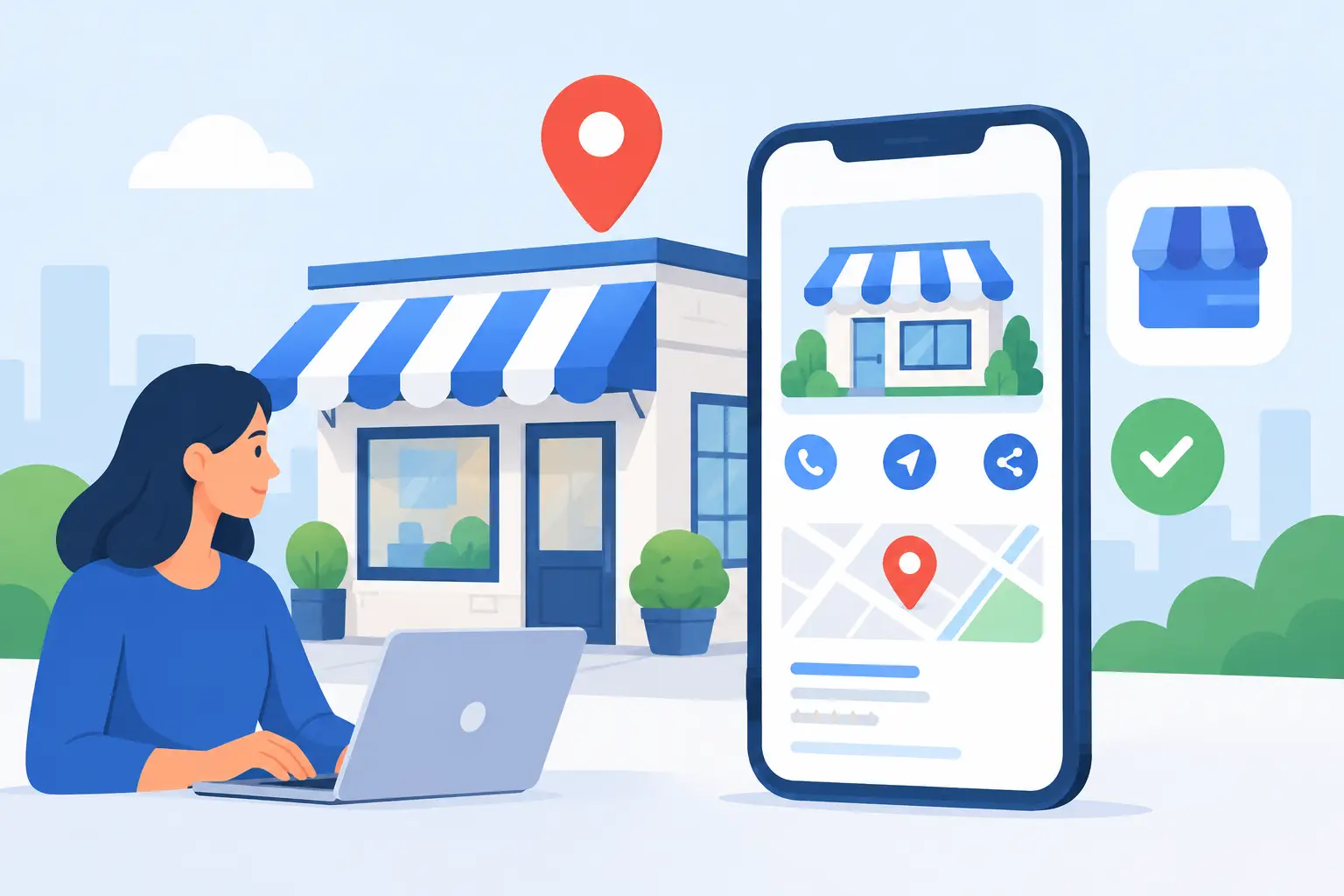

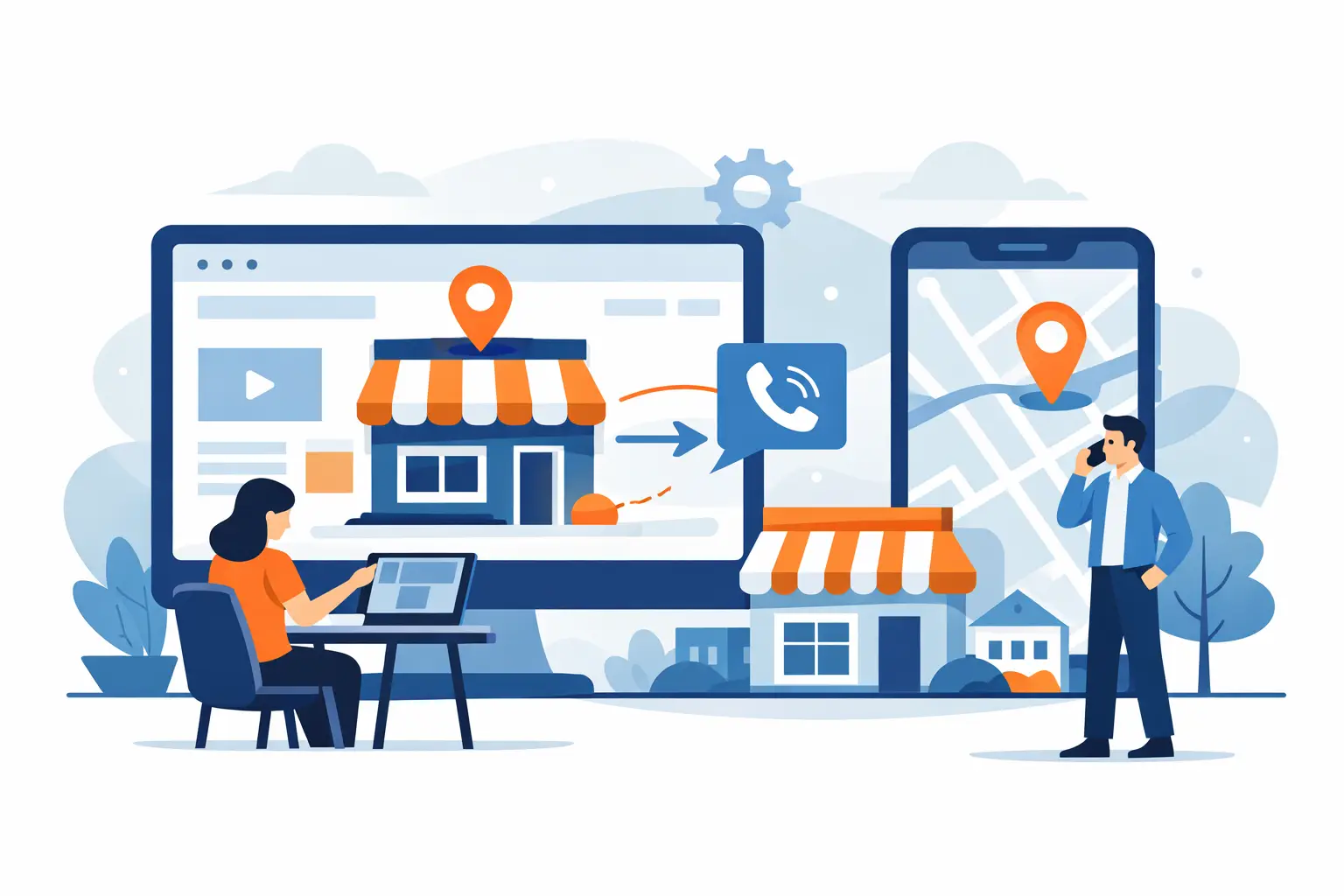
A homeowner with a leaking pipe is not looking for an award-winning brand story. They are looking for a plumber who serves their neighborhood, answers the phone, and can get there fast. The same is true for a family choosing pizza, a customer booking a salon appointment, or a property manager hunting for a reliable contractor. Web design for local businesses has one job: make the next step easy enough that a nearby prospect takes it now.
That means your website cannot simply look polished. It has to produce calls, quote requests, online orders, bookings, direction requests, and repeat visits. If it fails at those jobs, a beautiful homepage is just an expensive digital brochure.
Why Web Design for Local Businesses Is Different
A local business website operates under pressure. Most visitors arrive with a need, limited time, and several competitors one search away. They may be standing in a parking lot, sitting at their kitchen table after work, or comparing providers from a phone during lunch. Your site has seconds to answer three questions: Do you serve me? Can you solve my problem? How do I contact or buy from you?
National brands can spend months building recognition before a customer visits their site. Local operators often have to earn the sale in one session. That is why the best local websites lead with practical proof: the service area, the core offer, a clear call to action, current reviews, hours, pricing cues when appropriate, and real evidence that the business is active in the community.
A restaurant site should not bury online ordering under a lifestyle photo. A roofer should not make a storm-damage customer hunt for a phone number. A local retailer should not force someone to guess whether an item is available in-store. Every extra step gives the customer a reason to choose the business down the street.
Build the Homepage Around Customer Intent
Your homepage is not a welcome mat. It is a sales page for people who are deciding whether to contact you right now. Start with a direct statement of what you do and where you do it. “Family-owned Italian restaurant in downtown Newark” is more useful than “Authentic flavor, unforgettable moments.” “Emergency HVAC repair in Mesa” beats vague language about comfort and quality.
Place your primary action where people can see it without scrolling. Depending on the business, that may be Call Now, Order Online, Book an Appointment, Get a Free Estimate, or Check Availability. A service company may need a prominent phone number and short request form. A pizzeria may need ordering and catering buttons. A live entertainment venue may need upcoming dates and ticket information.
The right action depends on how customers buy. For a higher-ticket kitchen remodel, asking for a consultation makes sense. For a $20 lunch order, a long lead form is a conversion killer. Good design follows the sale, not design trends.
Give Visitors the Information That Removes Doubt
People are willing to contact local businesses when the basics are obvious. Put your name, phone number, service area, hours, and primary offer in plain view. On mobile, make phone numbers tappable and keep the main action visible as visitors scroll.
Then add the proof that matters to your category. For a home service business, that could include licensing, insurance, financing options, before-and-after work, and emergency availability. For a restaurant, it may be menu highlights, delivery areas, online ordering, private-party details, and customer favorites. For a retailer, include the brands you carry, parking details, local pickup, and current promotions.
Do not make every visitor read a wall of copy. Use short sections, strong labels, and real photography where possible. Stock photos can make a local company look interchangeable. Photos of your team, storefront, food, completed projects, trucks, or packed event space tell customers that you are real, local, and ready for business.
Make Mobile the Main Experience
For many local searches, the phone is the storefront. A customer searches “coffee near me,” “locksmith open now,” or “best tire repair in [city]” from a mobile device and makes a decision quickly. If your website loads slowly, has tiny text, or places the contact button below a giant image, you are paying for traffic you cannot convert.
Mobile-first design means more than shrinking a desktop page. Buttons need room for a thumb. Forms need to be short. Menus need to be clear. Images need to load efficiently. Important details such as hours, directions, service areas, and booking options should not be trapped inside a menu.
Test your website like a customer would. Open it on your phone using cellular data. Try to place an order, request an estimate, call the business, and find your location. If any task feels annoying, fix it before spending another dollar on advertising or social media.
Turn Local Trust Into More Leads
A strong local reputation should not live only on third-party platforms. Bring trust onto your website where it can support the conversion. Feature a small number of specific customer testimonials near the action you want visitors to take. A review that mentions a neighborhood, a fast response, a favorite menu item, or a difficult job solved is more convincing than generic praise.
Case examples work especially well for service businesses. A short story about replacing a failed water heater the same day, restoring a roof after a storm, or helping a local business complete a renovation gives customers a concrete reason to believe you can handle their situation.
Trust also comes from consistency. Your business name, address, phone number, hours, and service descriptions should match what customers see across your local presence. Conflicting information creates hesitation. It can also cost you visibility when search engines are trying to understand where and how you operate.
Design Service and Location Pages That Can Be Found
One homepage cannot do all the work. If you offer multiple services, create focused pages that explain each one clearly. A landscaping company might need separate pages for lawn maintenance, hardscaping, drainage, and seasonal cleanup. A restaurant could use dedicated pages for catering, private events, online ordering, and each location.
Location pages are valuable when they are real and useful, not copied pages with a different city name inserted. Explain what you offer in that area, show local projects or testimonials where available, confirm service boundaries, and give visitors an easy way to reach you. This gives nearby customers a more relevant experience and gives search engines clearer context.
There is a trade-off. A small business does not need 100 thin pages targeting every suburb within driving distance. That approach creates clutter and rarely helps customers. Start with your core services and the markets that matter most to revenue. Build depth before chasing volume.
Connect the Website to the Rest of Your Marketing
Your website should be the conversion center for local SEO, paid ads, email campaigns, text promotions, social posts, and reputation efforts. Each campaign needs a destination that matches the message. If you advertise a weekday lunch special, send people to a page where they can see the offer and order immediately. If you run ads for furnace repair, send visitors to a repair page, not a generic homepage.
This connection also makes performance easier to measure. Track calls, form submissions, bookings, online orders, and other actions that matter to the business. Website visits alone do not pay payroll. Knowing which pages and campaigns produce real customer activity helps you invest with confidence.
At A Vital Need, we look at a local website as a growth asset, not a design exercise. The goal is to make a quality business the obvious choice in its trade area – then give interested customers no reason to hesitate.
The Local Website Check Before You Launch
Before calling a redesign complete, make sure the site can answer these practical questions without friction:
- Can a first-time visitor tell what you do, where you work, and why they should choose you within a few seconds?
- Can a mobile visitor call, order, book, or request an estimate without pinching, searching, or filling out a long form?
- Does every core service have a clear page with useful information and a relevant next step?
- Does the site show credible proof through reviews, local work, team details, certifications, or customer results?
- Are hours, contact details, service areas, and offers current everywhere they appear?
A local website does not need fancy effects to win. It needs clarity, speed, trust, and a direct path to action. Get those fundamentals right, keep improving based on what customers actually do, and your website can become the employee that keeps bringing in the next call long after the office closes.